Now
87°
Sat
93°
Sun
98°
President Trump delivers remarks at Darline Graham’s Senate campaign rally in South Carolina.
by Nick Karmia
DeSantis' original property tax proposal included a mechanism to offset losses in fiscally constrained counties, but it did not survive the Legislature in the package ultimately sent to voters.
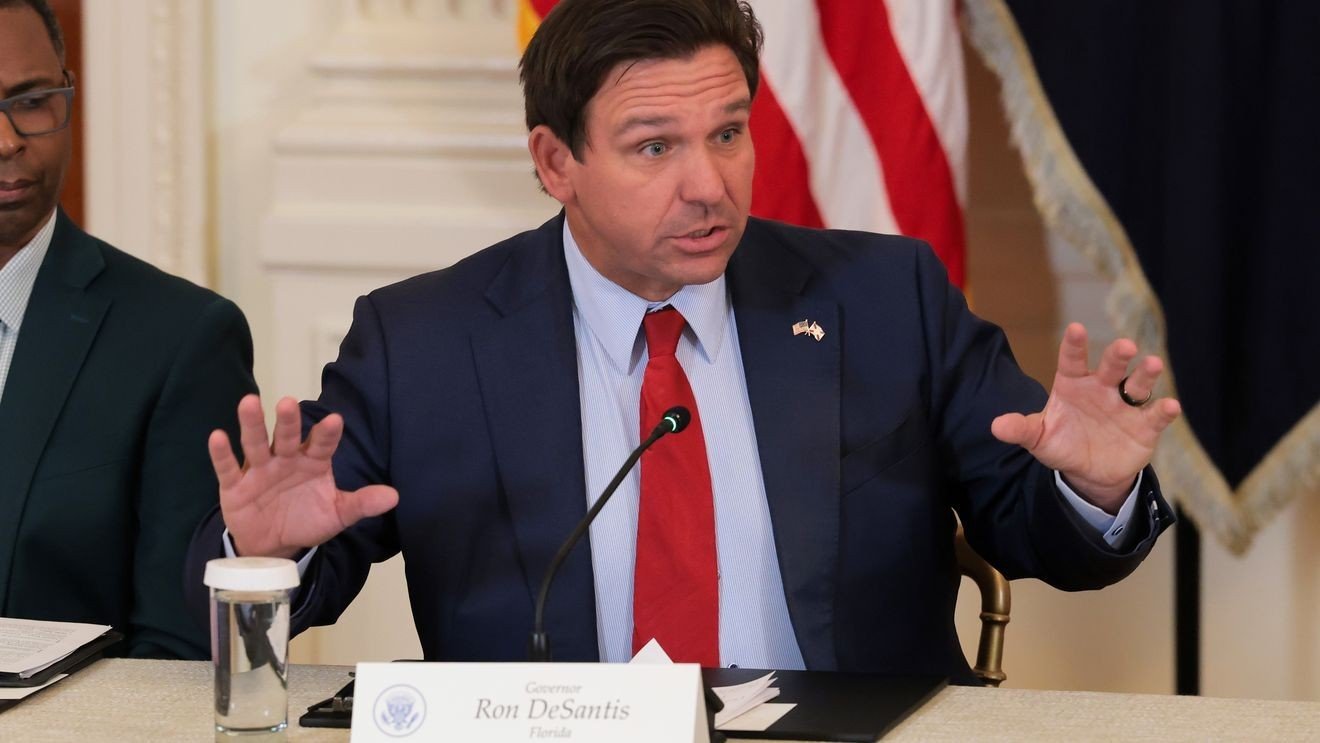
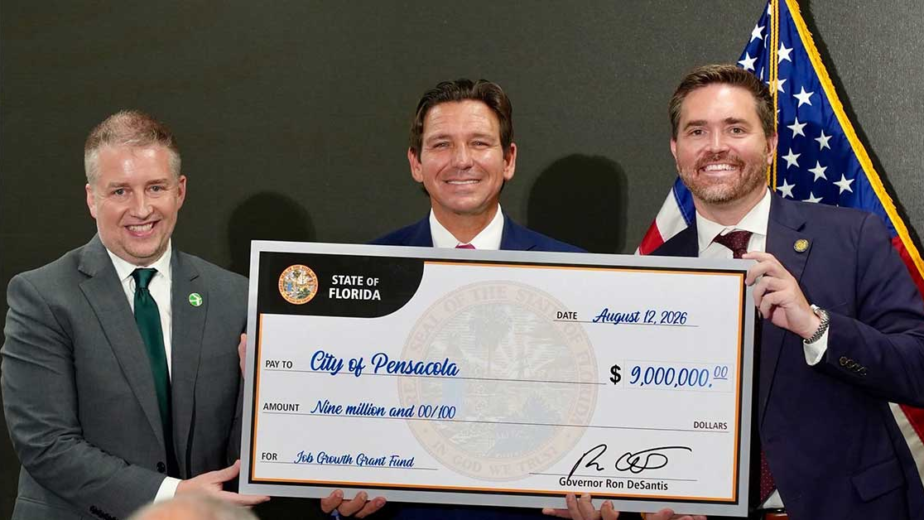
TALLAHASSEE, Fla. — Gov. Ron DeSantis says Florida can protect rural counties from potentially steep revenue losses if voters approve Amendment 3 in November.
The unanswered questions are how long that help could be needed — and whether future lawmakers would keep paying for it.
Amendment 3 would increase the homestead exemption for non-school property taxes to $150,000 in 2027 and $250,000 in 2028. State economists project the measure could reduce local non-school property tax revenue by nearly $4.93 billion in its first full fiscal year, growing to about $8.71 billion the following year and eventually reaching a recurring annual impact of roughly $11.83 billion.
DeSantis argues Florida can absorb the impact on its smaller, fiscally constrained counties.
“If we eliminated all homestead tax in Florida, and we told rurals: Whatever the difference is, we'll pay it,” DeSantis said Thursday. “We have a big surplus. We'll do it. It's chump change for us.”
Florida already provides special funding to fiscally constrained counties, including reimbursements tied to previous property tax changes. State law, for example, requires annual appropriations to compensate those counties for revenue lost because of a constitutional amendment voters approved in 2024. Other reimbursement requirements trace back to property tax changes approved by voters in 2008.
But DeSantis' latest promise raises a longer-term issue for counties that could permanently lose a source of recurring revenue: When would the new state assistance end?
Wakulla County Commission Chair Ralph Thomas said he would rather keep decisions over local taxes and spending closer to home.
“Would we want the state to go to Washington, D.C., and ask to fund us and take care of us?” Thomas said. “And I think the answer is going to be no in both cases. We want local decision making.”
Wakulla is one of Florida's 29 fiscally constrained counties. A financial sustainability plan prepared by county staff projects Amendment 3 could reduce the county's General Fund revenue by approximately $6.5 million annually during the initial years of implementation. The county calls that a structural reduction in recurring revenue, not a temporary economic fluctuation.
The plan considers new revenue sources, organizational changes and reductions in services if the amendment passes. Thomas stressed that the recommendations are proposals from county staff and the administrator, not decisions already made by commissioners.
“If this thing passes, it is real cuts,” Thomas said. “We've got to sort through that and figure out what we're willing to live with and without.”
The potential impact stretches across the Big Bend.
For fiscal year 2028-29, state economists project local governments could lose about $93.8 million in Leon County, $10.4 million in Wakulla, $8 million in Gadsden, $3.3 million in Franklin, $3.2 million in Jefferson, $3.1 million in Taylor, $3 million in Madison and $900,000 in Liberty. Those estimates include affected local governments within each county, not simply county commission budgets.
How much of the impact in rural counties would ultimately be picked up by the state has not been determined.
DeSantis' original property tax proposal included a mechanism to offset losses in fiscally constrained counties, but it did not survive the Legislature in the package ultimately sent to voters.
Rep. Gallop Franklin II, a Tallahassee Democrat whose district includes fiscally constrained Gadsden County, said he would support creating a mechanism to help those communities.
“There's no guarantee that the Legislature will do that,” Franklin said.
Franklin's larger concern is whether such assistance could become a continuing obligation.
“Most of our fiscally constrained counties have been fiscally constrained counties almost my entire life,” Franklin said. “So we don't have all of this growth happening in rural Florida that's expanding the tax base beyond homestead property.”
DeSantis sees a different trajectory. He has argued that homeowners keeping more of their money would stimulate economic activity, expand rural economies and eventually produce enough additional revenue that state assistance would no longer be necessary.
The state's fiscal analysis does not estimate when — or whether — that economic growth would replace the projected losses.
Amendment 3 could also set the stage for additional property tax reductions. It would require lawmakers to establish a uniform process allowing counties and municipalities to increase the exemption, potentially until homesteads are fully exempt from county and municipal property taxes. The Revenue Estimating Conference notes that no timeline or limit is provided for that process, and says its fiscal impact is unknown because it depends on future legislative action.
Franklin said that makes the durability of any state backstop important.
“There's also no guarantee that the funding will be there into perpetuity beyond even if the measures are created and the mechanisms created to fund fiscally constrained counties in the way that the governor's mentioned,” Franklin said.
DeSantis says lawmakers can address the issue in a special session after Amendment 3 passes.
Thomas wants them to do it sooner.
“If they want to do a special session, do it now and create the implementing bill before November,” Thomas said. “That way when people go to the ballot, they know exactly what they're getting.”
Voters will take up Amendment 3 in the November general election. It needs at least 60% support to become part of the Florida Constitution.
2026 Sinclair, Inc.
DeSantis promises rural backstop for Amendment 3, but how long would Florida pay? – wtwcfox