HEALTH
Published
Aug 14, 2026 at 01:18 PM EDT
updated
Aug 14, 2026 at 01:19 PM EDT
Reporter
The U.S. budget deficit is swelling in 2026 on the back of increased outlays and tariff refunds, underscoring how last year’s efforts to slash government spending failed to halt the ongoing growth of the nation’s nearly $40-trillion debt.
According to the Treasury’s latest monthly statement, the government brought in $334 billion while spending $766 billion in July. This resulted in a deficit of $432 billion for the month—equivalent to $14 billion per day—the highest month total since March 2021 and the highest July total ever recorded.
When approached for comment, the Treasury noted that July is typically a “deficit month” because there are no major tax deadlines, and the fact that August 1 was a nonbusiness day, meaning spending on various kinds of benefits was pulled forward, resulting in an additional $99 billion hit in July.
The deficit has now swollen to $1.8 trillion for the first 10 months of the government’s fiscal year, which ends on September 30. This is up from $1.6 trillion for the same period a year prior, and is more than the total for the whole of the last fiscal year, raising concern among fiscally hawkish voices on Capitol Hill.
“We are already feeling the consequences of this extreme borrowing—high interest rates, trillion-dollar interest payments, and looming trust fund insolvency that threatens benefits for Social Security and Medicare,” Maya MacGuineas, president of the Committee for a Responsible Federal Budget, said in a statement this week.
And much of this furor has been directed at the Department of Government Efficiency (DOGE), President Donald Trump’s now-dissolved cost-cutting agency, which faces ongoing criticism for its aggressive actions and for overstating what was achieved during its brief existence.
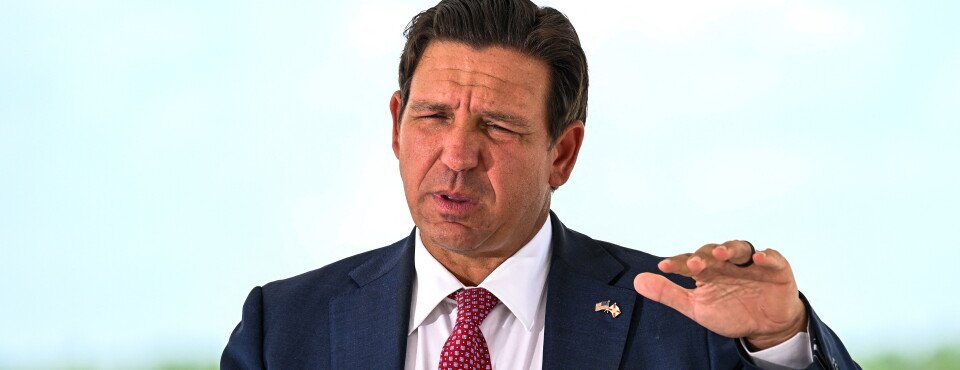
Ron DeSantis, Florida’s Republican governor, reacted to a post about the swelling deficit, writing on X: “The failure of DOGE in one sentence…”
View this post on X
DOGE’s de facto leader, Elon Musk, originally outlined a goal of at least $2 trillion in savings, which was subsequently halved and further revised down to a $150 billion cut from the budget for the 2026 fiscal year.
The advisory agency was officially wound up on July 4 but quietly dissolved late last year, at which point the White House told Newsweek President Trump would continue to “actively deliver” on his promise to “reduce waste, fraud, and abuse across the federal government.”
While in operation, DOGE published its findings and actions—such as canceled contracts—on its website’s “Wall of Receipts.” The website remains online and still shows the figure of $215 billion in “estimated savings.”
Last week, however, the Government Accountability Office (GAO) published a report that found that DOGE’s claim of $110 billion in taxpayer savings through canceled contracts, grants and leases was unreliable and lacked “supporting evidence.” The GAO, an independent congressional watchdog, said DOGE was not transparent in how it calculated savings, and often took credit for contract cancellations that either never occurred or occurred before the agency itself was established.
“108 leases it reported that it cut were already being phased out when DOGE was established,” the GAO wrote in its report.
“It’s official: DOGE LIED about how much money it saved our government,” Democratic Senator Elizabeth Warren posted to X. “A government watchdog just uncovered that DOGE overstated savings by BILLIONS.”
“DOGE fought the Swamp and the Swamp won,” wrote Governor DeSantis, while blaming Congress for not codifying the advisory body and its recommendations.
“The goal was to reduce the budget…and reduce the deficit,” he said. “Of course Congress needed to enact it into law. It didn’t.”
According to the Treasury, Medicare and Social Security were the biggest budget items in July—totaling $174 billion and $141 billion, respectively—followed by $104 billion in interest paid on the national debt. In the fiscal year to date, the government has paid over $1 trillion in debt servicing costs.
Tariff refunds also proved to be a notable drain on the budget in July, costing over $33 billion last month. The government is still paying back most of the estimated $166 billion that was paid by importers in President Trump’s now-annulled emergency tariffs.
The administration recently confirmed that it had paid around $100 billion back to importers, and one trade attorney previously told Newsweek the process “has gone more smoothly than I would have anticipated.”
And the figures have raised further alarm among budget-conscious voices in Washington and certain economists.
Desmond Lachman, a former deputy director at the International Monetary Fund (IMF), has warned that the U.S., like many large economies, was on an unsustainable fiscal path characterized by large deficits and an apparent unwillingness to reduce these.
Lachman, currently a senior fellow at the American Enterprise Institute (AEI), told Newsweek that a “reckoning for the U.S. Treasury market” was on the horizon as a result, one which would “have major negative consequences for the U.S. and world economies.”
“The 30-year Treasury bond yields are now at a level last seen in 2007, Treasury Secretary Scott Bessent is increasingly relying on short-term borrowing to finance the government, and hedge funds and other leveraged borrowers are replacing the more stable bondholders like the foreign central banks,” said Lachman.
“It is troubling that the Trump administration is making no effort to reduce the government deficit but is rather now proposing a large-scale increase in defense spending that would cause the budget deficit to widen from an already worrying 6 percent of GDP,” he added. “My view is that the Trump administration is skating on economically thin ice.”
Contact Newsweek editors on this story: John Fitzpatrick and Gray R. Thomas
© 2026 Newsweek Digital LLC
DOGE Failed — America’s Budget Deficit Problem is Getting Worse – Newsweek