Now
76°
Sun
94°
Mon
96°
by Nick Karmia
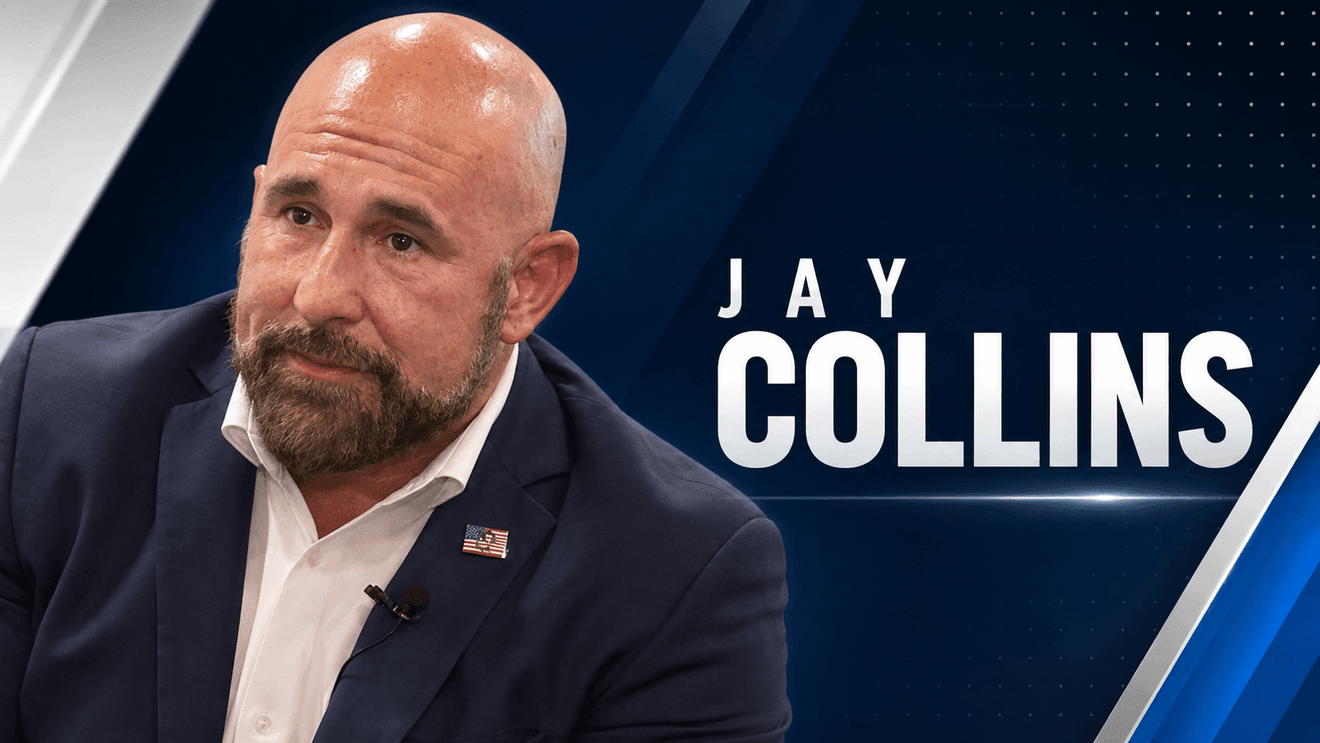
TALLAHASSEE, Fla. — Jay Collins’ argument for becoming Florida’s next governor starts with the job he already has.
The former Green Beret served in the Florida Senate before Gov. Ron DeSantis appointed him lieutenant governor in August 2025, calling Collins “day one ready.”
Collins now points to that appointment as evidence he is prepared to take over Florida’s executive branch.
But DeSantis has stopped short of endorsing him in the Republican primary, and Collins’ opponents have questioned how much executive authority the lieutenant governor actually exercises.
FOX49 sat down with Collins ahead of Florida’s Aug. 18 primary to test his proposals — and the experience he says separates him from the field.
Collins wants Florida to eventually eliminate property taxes on primary residences.
His first step would be implementing the constitutional amendment voters will consider in November, which would increase the non-school homestead exemption to $150,000 in 2027 and $250,000 in 2028.
But Collins told FOX49 he is uncomfortable with parts of the proposal.
FOX49 asked: Why vote for a constitutional amendment he believes inadequately protects essential services?
“This thing's up in the air, it's a jump ball and I'm gonna err on the side of the people and their money,” Collins said. “Maybe places like Liberty County have a harder time.”
Collins says the state could help Florida’s 29 fiscally constrained counties, potentially through a trust fund or other state assistance. He also argues local governments can become more efficient through centralized purchasing and other savings.
The potential revenue loss is significant. Florida legislative analysts estimate the amendment would eventually reduce local-government revenue by billions annually.
Collins nevertheless views the amendment as only one stage toward his ultimate goal.
“I fully support getting rid of property tax on homesteaded properties,” he said. “That doesn't mean you can hit an easy button, it all ends overnight. You're gonna have to phase this in.”
Collins supported Florida’s 2023 tort reforms as a state senator.
There are measurable signs of improvement on the industry side. The Florida Office of Insurance Regulation reported residential property lawsuits fell roughly 23% from 2023 to 2024, while dozens of insurers have since sought rate decreases or no increase for policies effective in 2024 or later.
But premiums remain expensive.
Collins wants to preserve the tort reforms while expanding home-hardening programs, targeting fraud, increasing insurer transparency and speeding permitting.
But he cautioned against candidates promising an immediate reduction.
When FOX49 asked what a homeowner could realistically expect to save under his proposals, Collins declined to quantify it.
“I'm not going to give you a number,” he said. “We haven't finished crunching that, but what I can tell you is you're going to see a market reduction.”
Immigration is one area where Collins already plays a public role in the DeSantis administration.
He has appeared alongside law enforcement during coordinated immigration operations, including one that resulted in hundreds of arrests over four days.
Asked whether a Collins administration would expand arrests, detention facilities and state involvement, he said decisions would depend on operational needs.
But his overall direction was unambiguous.
Collins also wants to restrict some forms of legal immigration, including the use of H-1B visas.
“I want Floridians and Americans to have those opportunities,” Collins said. “That's why I think the H-1B system, frankly, is a little frustrating and why we have to prioritize our people.”
His position also extends to people from countries he considers national-security threats.
FOX49 asked whether Florida should treat an individual legally in the country as a security risk because of nationality rather than requiring evidence that the individual poses a threat.
“No, I don't think we should be bringing in people who don't espouse our values, who openly attack them,” Collins said. “You don't have a right to be here if you're a foreign citizen.”
Pressed about someone from China who opposes the Chinese Communist Party and wants to study or work in Florida:
“I want to prioritize taking care of Floridians and Americans first.”
Collins wants Florida to expand trades, apprenticeships, agriculture and cybersecurity pathways.
But Florida already has career and technical education across 17 career fields, and the state says its colleges and technical schools have awarded more than half a million workforce credentials since 2018.
So FOX49 asked Collins what isn't working.
“Well, look, I don't know that it's not working,” Collins responded.
His argument is instead that Florida should build on the existing system and combat a cultural preference for four-year degrees.
He recalled being told trades were “for the kids who can't make it in college.”
“That bias still exists, unfortunately,” he said.
Collins wants more juniors and seniors working through apprenticeships and dual-enrollment arrangements with businesses before graduating.
On other issues, Collins opposes recreational marijuana legalization, describes himself as pro-life, strongly supports Second Amendment rights and says artificial intelligence may require new “guardrails.”
“I don't think AI should replace people,” Collins said. “I think AI is a tool, like a hammer, a screwdriver, or a saw.”
On hyperscale data centers — facilities capable of consuming enormous amounts of electricity and, depending on their design, water — Collins favors local decision-making rather than a statewide prohibition.
“I don't think it's a conservative approach to ban large swathes of your economy, but I can promise you, if a city or a county puts a moratorium out there for a short term, I support that.”
That puts Collins at odds with some of his Republican opponent like James Fishback and Paul Renner, who told FOX49 they currently supports a statewide ban on hyperscale facilities.
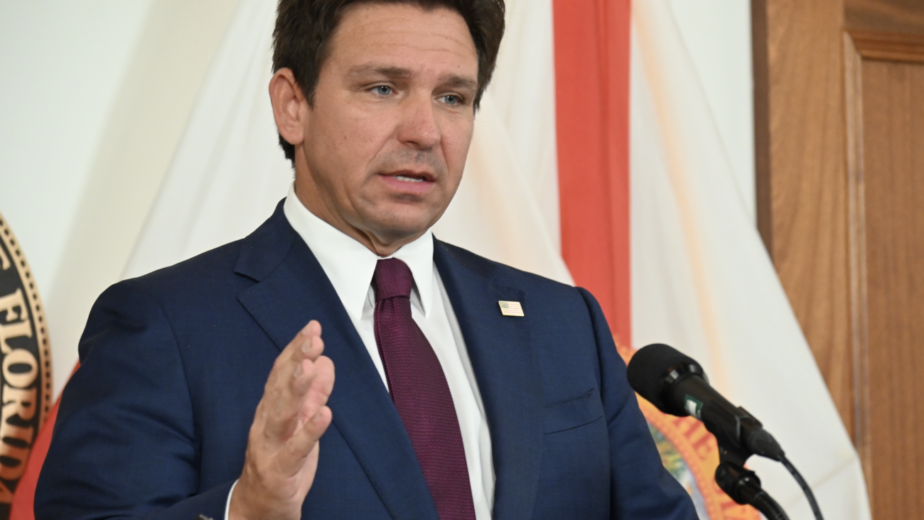
DeSantis selected Collins as lieutenant governor and described him as “day one ready,” but has not formally endorsed Collins’ gubernatorial campaign.
Collins argues the appointment itself speaks louder.
“I'm the only person in this race who he handpicked among the 23 and a half million people that if something happens … that I would step in and I would be the governor,” Collins said.
“He wouldn't do that if I wasn't competent, capable, and ready to lead the state.”
But Florida’s lieutenant governor does not operate like independently elected Cabinet officers who have their own constitutional responsibilities.
When FOX49 asked Collins to identify a major responsibility over which he personally has final authority, he acknowledged that distinction.
“My job is to be the number two,” Collins said. “What's given to me is apportioned to me by the governor.”
Collins pointed to his work on immigration enforcement, first-responder mental health and Operation Senior Shield, an initiative aimed at protecting older Floridians from fraud.
Former House Speaker and rival Paul Renner has attacked Collins’ experience by characterizing the lieutenant governor as largely a “ribbon cutter.”
Collins had a considerably less restrained response.
“I remind the world that Paul Renner tried out to be the lieutenant governor,” Collins said. “So if it's just a ribbon cutter, what's that say about him?”
“What does it say about him that I was picked and he wasn't?”
That exchange captures the central argument Collins is asking Republican voters to settle.
His opponents say being Florida’s No. 2 is not the same as running the state.
Collins says the fact DeSantis selected him to be the person who could take over is itself evidence that he can.
The governor, however, has so far left the final judgment to Republican voters.
2026 Sinclair, Inc.
Jay Collins: Where the Florida Governor candidate stands on the issues – wtwcfox