Published
Aug 17, 2026 at 05:30 AM EDT
Senior Reporter
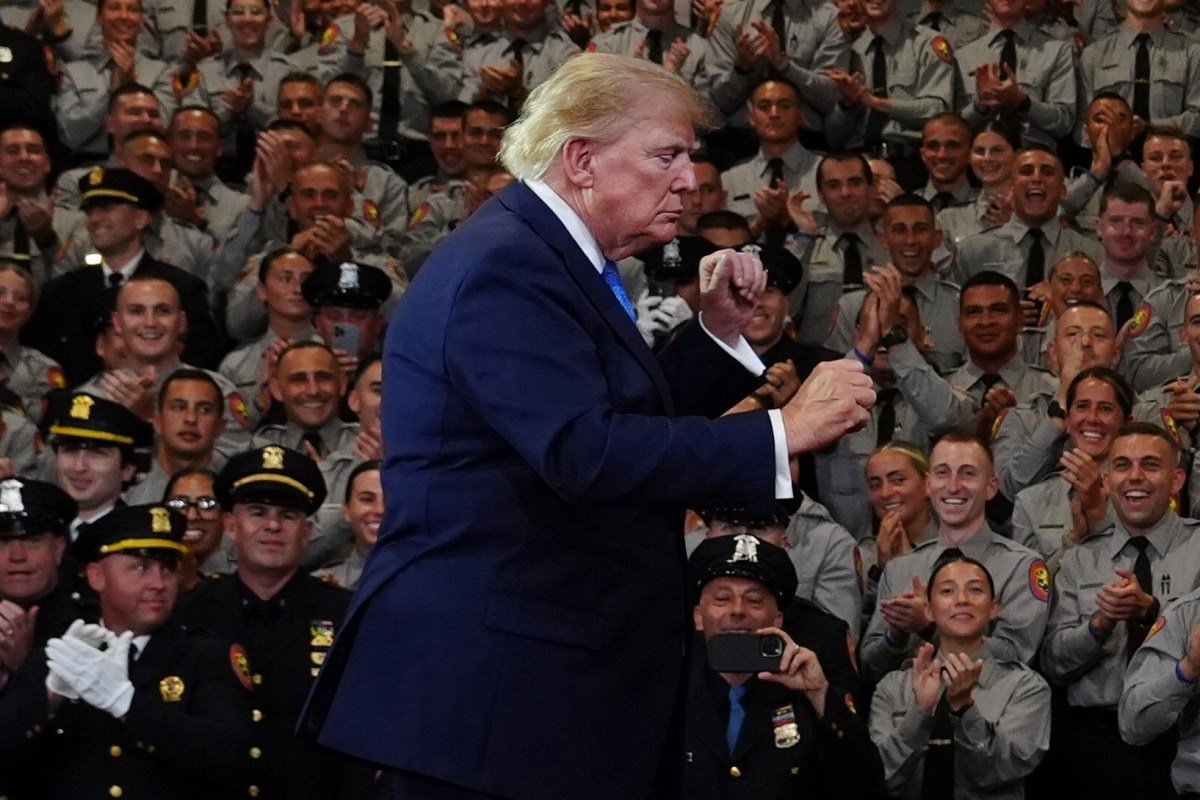
President Donald Trump’s kingmaker power faces another important test on Tuesday amid Republican primaries in Florida and Wyoming, as recent gubernatorial races have exposed limits to his influence over the GOP.
Despite his plunging approval rating since the start of the war in Iran, Trump’s endorsement remains one of the most powerful forces in Republican politics. As of early August, the president had endorsed 312 primary candidates in congressional, state legislative and state executive races in the 2026 election cycle, according to Ballotpedia.
Among the candidates whose races have already happened, a staggering 97 percent went on to win their primaries—showing how influential the president can be within the GOP. While the president has maintained a near-unmatched primary success rate overall, he has seen a disproportionate share of defeats this year in gubernatorial contests.
As of July 10, all 170 congressional candidates he endorsed had won their primaries—though that perfect record has since taken a hit. The president has also backed 17 candidates in open Republican gubernatorial primaries this year, according to an analysis by Politico. However, 10 of those candidates have won their races, while four have lost.
Those who lost were U.S. Representative Randy Feenstra of Iowa, Lieutenant Governor Pamela Evette of South Carolina, Lieutenant Governor Burt Jones of Georgia and MyPillow founder Mike Lindell in Minnesota.
“Governors are an entirely different type of politician,” Justin Vaughn, a professor of political science at Coastal Carolina University, told Newsweek.
“Voters tend to see them less as foot soldiers in a national partisan fight and more as executives responsible for things happening in their own state,” he added. “Gubernatorial candidates tend to also be better known, and there are different players involved in shaping the outcomes.”
The upcoming Florida and Wyoming races could show whether those losses were isolated setbacks or evidence that Republican voters weigh Trump’s endorsement differently when choosing a state’s leader.
Newsweek contacted the White House for comment by email on Sunday morning.
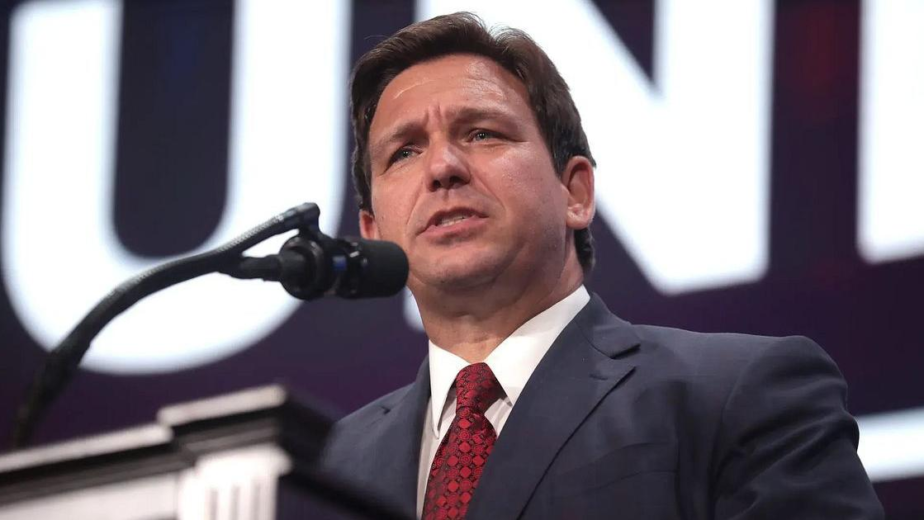
After two terms in office, Florida Governor Ron DeSantis is set to leave the role in January 2027, as he is term-limited from running for reelection.
Among the candidates running to replace him is U.S. Representative Byron Donalds, whom Trump endorsed earlier this year and who currently has a comfortable lead in the polls over the other contenders. Lieutenant Governor Jay Collins, whom DeSantis has not endorsed despite appointing him only last year, is also running—as are investor James Fishback and former state House Speaker Paul Renner.
A Quantus Insights poll conducted between July 27 and 29 among 635 respondents found that Donalds drew 49.6 percent support from Florida Republican voters, more than three times the share of his nearest rival, Collins, with 15.7 percent. Fishback followed with 12.4 percent of the vote, while 13.5 percent of respondents remained undecided.
The primary is scheduled for August 18, while the general election is set for November 3.
Newsweek contacted the Donalds and Collins campaigns for comment by email on Sunday morning.
Four candidates are running in Wyoming’s Republican gubernatorial primary on Tuesday: state Senator Eric Barlow, retired Marine Corps Colonel Brent Bien, rodeo-production professional Curt Blake and state Superintendent of Public Instruction Megan Degenfelder.
Trump endorsed Degenfelder before she even announced her campaign, calling her “MAGA Megan.”
During a telephone rally last month, he reiterated his support for Degenfelder, telling voters: “Get out and vote for Megan Degenfelder. And you’re going to be happy. You’re going to say, ‘President Trump gave me a good idea.’ You’ll look back in the years and you’ll say, ‘That was a great, a great choice.'”
View this post on X
The Wyoming Republican Party, on the other hand, has endorsed Bien. Barlow, however, has collected the most money since announcing his bid for governor a year ago. According to an analysis by WyoFile, he has raised over $1.5 million. Degenfelder, by comparison, has raised roughly $1.3 million and Bien just over $201,000.
A recent poll released by Barlow’s campaign shows him leading over the other two candidates with the support of 42 percent of voters, while Degenfelder held 19 percent and Bien 14 percent.
“President Trump is free to endorse whomever he chooses. I have made a deliberate choice throughout this campaign not to seek endorsements from any elected officials—the only endorsement I seek is from the people of Wyoming,” Bien told Newsweek in a written statement.
“I look forward to working with President Trump on the issues that matter most: protecting the constitutional liberties of Wyoming residents and returning Wyoming to the people,” he added.
“Our campaign has stayed focused on conservative leadership, limited government, and putting Wyoming first—not on the endorsement fight. Alongside the thousands of supporters standing with us, I remain confident in our message and the broad support we are seeing across the state as we head into the primary,” Bien continued.
Newsweek also contacted the Barlow and Degenfelder campaigns for comment by email on Sunday morning.
These primaries may indicate whether Trump’s endorsement is less effective in state-level races, showing that even his powerful influence has limits when it comes to location-specific issues.
The voters in a gubernatorial election are the same as in a congressional race, but the races and the people running in them are different, Vaughn said.
“House races have become extraordinarily nationalized, particularly in primaries, where party and presidential loyalty can be powerful shortcuts for voters,” he added. “Conversely, voters are more likely to ask if a candidate for governor seems capable of actually running their state, and established state political relationships and reputations matter more.”
Trump has visibly and wholeheartedly thrown his support behind both Donalds in Florida and Degenfelder in Wyoming, turning their candidacies into something of a referendum on his kingmaker status and his grip on the party. The Wyoming race could be the more interesting to keep an eye on, as Degenfelder appears to be polling behind Barlow.
“In Florida, Donalds is the clear favorite. The polling has consistently put him well ahead of the field, so a loss would be an incredible and unexpected upset. Wyoming is much harder to call,” Vaughn said.
“In Wyoming, the story is a little different. Degenfelder is closing, but Barlow has maintained a slight edge going into the final stretch. I wouldn’t be surprised by any outcome,” he added.
For Vaughn, one loss would not suddenly make Trump irrelevant in Republican primaries.
“President Trump remains by far the most important individual endorser in the nation—for either party,” he said.
“Another gubernatorial loss could strengthen the argument that there are limits to his kingmaker power, particularly when Republican voters are choosing an executive rather than a legislator, but the president’s endorsement is still enormously—even historically—beneficial to GOP primary candidates,” Vaughn continued.
Another state is set to hold an open gubernatorial primary on Tuesday but without the same kind of pressure, as Trump has not endorsed a candidate there. Alaska’s gubernatorial race is a crowded one, with 17 candidates hoping to replace Republican Governor Mike Dunleavy, who cannot run for reelection after serving two terms.
In Oklahoma, the Trump-endorsed former state Senator Mike Mazzei has advanced to a runoff set to take place on August 25.
Contact Newsweek editors on this story: Daniel Orton and Shakeema Edwards.
© 2026 Newsweek Digital LLC
Trump’s Kingmaker Status Under Threat in Governor Races – Newsweek