Advertisement
Free Newsletters
Sign up now
Free Newsletters
Sign up now
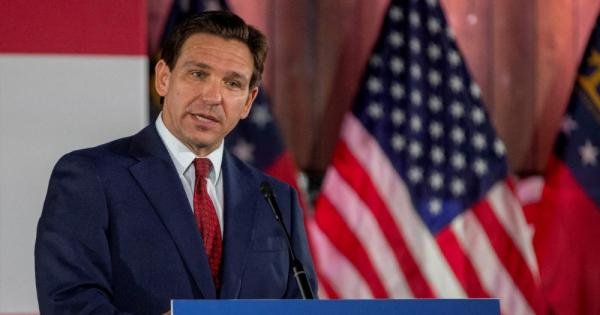
Republican Gov. Ron DeSantis of Florida is pictured in a March 30, 2023, photo. (OSV News/Reuters/Alyssa Pointer)
by NCR Editorial Staff
View Author Profile
Send your thoughts to Letters to the Editor. Learn more
Florida’s Catholic bishops on July 27 issued a nine-page pastoral letter against the death penalty, urging people to at least reflect on the church’s opposition to the practice, citing scripture, previous statements from the U.S. Conference of Catholic Bishops, the Catechism of the Catholic Church and remarks from recent popes.
But Florida’s Catholic governor, Ron DeSantis, apparently didn’t get the memo.
The day after the bishops’ letter was made public, Florida executed two people — just five hours apart — at Florida State Prison, in a remote area in the northern part of the state. This was Florida’s first double execution in six decades but it tracks with the state’s recent uptick in capital punishment.
The Sunshine State has had “a record-setting pace of executions over the past 18 months” and the most executions in the country this year,” according to a recent report by ProPublica. At this rate, Florida is quickly catching up to Texas which has long had the most executions in the nation. This increase stands out amid an otherwise encouraging two-decade decline nationwide in the use of the death penalty.
But some other states also don’t have a decent record. On Aug. 13, Tennessee, Alabama and Oklahoma all executed inmates — the first time in the U.S. since 2010 that three people were put to death on the same day.
But back to Florida. Last year alone the state executed 19 death row inmates, and this year the number is already at 12, with three more scheduled by Sept. 10, including one on Aug. 18. This trend alarms Florida’s bishops and it should stir the consciences of all Catholics.
“The record number of executions in Florida last year, and the increased pace at which they continue to be carried out, call for a response,” the bishops wrote. “In 2025, the number of executions conducted by our state more than doubled the previous record and was at least four times higher than any other state in the nation.”
Around the country whenever there are executions, there are almost always prayerful vigils just outside the prisons, with people praying for the person being executed as well as the victims, their family members and prison workers.
Florida’s late July execution of two men by lethal injection was no exception. That afternoon, a group of Catholics held a prayer vigil across the street from the Florida State Prison.
Advertisement
They were joined by Bishop William Wack of Pensacola-Tallahassee, who made the five-hour drive in part because one of his diocesan priests, Fr. Dustin Feddon, had been the spiritual advisor to James Duckett, the first to be executed that day. The priest was also in the execution chamber with Duckett. The second man executed, Dominick Anthony Occhicone Jr., was 80 years old, the second-oldest inmate known to receive a lethal injection in modern U.S. history.
The Florida Catholic newspaper reported that the bishop told the crowd of about 50 who gathered — holding placards against the death penalty or umbrellas to shield themselves from the sun — “Everyone has dignity. No matter who you are, what you’ve done. You never lose that.”
He thanked them for their presence each time an execution takes place and pointed out that the state’s bishops have written to DeSantis before every execution — 40 of which have taken place since he became governor in 2019.
Even though the letters do not get answered and the prayer vigils continue at the prison and in local parishes at each execution, the bishop essentially said their efforts haven’t been in vain.
“It can be frustrating, and I’m sure there are distractors who say, ‘Why do you go?’ Well, we go because we are helping. If walking with people, bearing witness to life is all we can do, then that is a lot,” Wack said. “We are reminding people why we are opposed to this. It is because we are for life. We are for mercy. … We want to remind people of that, especially our leaders.”
The newspaper, covering the seven dioceses in Florida, noted that when vigil participants outside the state prison learn that last-minute appeals for death row inmates have been exhausted, they take part in a somber tradition, striking a bell with a hammer while saying “Not in my name,” a sound that they say is loud enough for inmates to hear across the street.
That phrase, “not in my name,” rings true for us as well.
It is echoed by those who minister to death row inmates and to those working to change laws around it as our reporter, Camillo Barone reported in his three-part series on the death penalty. His stories were based on several months of interviews with Briley Piper, a death-row inmate in South Dakota, as well as those who care for him and helped him in his process to become Catholic.
Piper, now 45, was arrested at 19 for murder and is currently the only person on South Dakota’s death row. The state’s attorney general has said Piper will likely be executed before the end of this year.
As Barone pointed out, Piper’s story wasn’t an easy one to tell and it “raises difficult questions about punishment, conversion and redemption and whether a human being should be defined entirely by the worst act of his life.”
Sr. Helen Prejean, a Sister of St. Joseph and longtime advocate against the death penalty, has often preached this same message: People are worth more than the worst thing they have ever done.
South Dakota state Rep. Tim Reisch, who had a change of heart about the death penalty after hearing Pope Leo XIV speak about it, introduced a bill earlier this year that would have repealed the death penalty. The bill failed in committee, which he anticipated.
Reisch said his position placed him against the political current of his state but he sticks to his grasp of human dignity, telling Barone, “I think nobody’s as bad as the worst thing they ever did.”
The Florida bishops said this as well, stressing that they wrote to “repeat the message of the dignity of every person.”
“We are required to remember that ‘not even a murderer loses his personal dignity,'” they said, quoting St. John Paul II’s encyclical, Evangelium vitae. “We are required to pray for the murderer’s repentance and even to desire his good.”
That’s a message DeSantis and other political leaders need to continually be reminded of.
Advertisement
Advertisement
Advertisement
Advertisement
Enter your email address and select any of the newsletters below.
The latest news and feature articles
The nexus between religion and politics
NCR staff talk music, television, books, movies and more
EarthBeat dives into the week’s climate change news
Find your latest book to read
One-stop newsletter for readers seeking reflection, depth, and meaning. Curated by Shannon Evans. Includes Sunday Resources, Sr. Mary McGlone, and others.
Editorial: Church anti-death penalty stance hits deaf ears. We're looking at you, DeSantis. – National Catholic Reporter